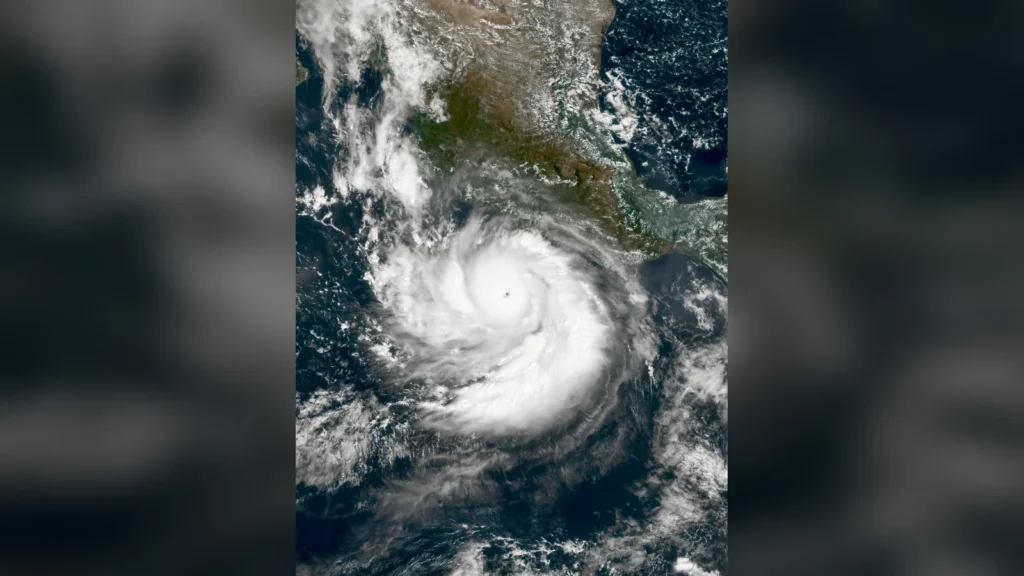
WASHINGTON — Hurricane Polo, a Category 3 system with sustained winds of 115 mph, made landfall on Mexico’s Pacific coast on Saturday, prompting authorities to issue flood and landslide warnings for the states of Guerrero, Oaxaca and Michoacán. The storm, which formed on September 20, is expected to bring up to 12 inches of rain in the next 48 hours, according to the National Hurricane Center.
Evacuations and Emergency Measures
State civil protection agencies ordered the evacuation of more than 12,000 residents from low‑lying coastal villages and hillside communities vulnerable to mudslides. In Acapulco, municipal officials activated emergency shelters at schools and community centers, providing food, water and medical kits. The Federal Civil Protection Agency (PROFEPA) deployed 150 rescue teams and three helicopters to assist with evacuations and to monitor river levels.
Mexico’s President, who is on a state visit to the United States, instructed the cabinet to prioritize disaster response and to allocate additional funds for relief operations. The federal budget for the emergency response was increased by ₹2.5 billion (approximately $30 million) to cover temporary housing, debris removal and infrastructure repairs.
Impact on Infrastructure and Economy
Preliminary assessments indicate that the storm has damaged sections of the Pacific Highway (Carretera Federal 200), disrupting transport between Acapulco and the inland city of Chilpancingo. Ports in Puerto Ángel and Lázaro Cárdenas reported temporary closures due to high surf and debris in the water. The Mexican Ministry of Tourism warned that cruise ship itineraries to the region may be altered, potentially affecting an estimated 45,000 tourists scheduled to visit the coastal resorts in the next week.
Local businesses, particularly those dependent on fishing and agriculture, reported losses as strong winds battered fishing boats and flooded fields of corn and beans. The National Institute of Statistics and Geography (INEGI) estimates that agricultural output in the affected districts could decline by up to 4% for the current harvest season.
International and Regional Context
Hurricane Polo follows a series of tropical systems that have battered the eastern Pacific in 2026, including Tropical Storm Nolo, which is now tracking toward Hawaii. Meteorologists at the World Meteorological Organization noted that sea‑surface temperatures in the region remain 1.2 °C above the long‑term average, a condition that intensifies storm development.
U.S. agencies, including the National Oceanic and Atmospheric Administration (NOAA), are monitoring the storm’s trajectory for potential cross‑border effects. While the system is not expected to impact the United States directly, the agency warned that moisture from Polo could enhance rainfall in the southwestern states, raising the risk of flash floods.
Humanitarian Response
The United Nations Office for the Coordination of Humanitarian Affairs (OCHA) activated its emergency operations center for Mexico, coordinating with the Red Cross, Médecins Sans Frontières and local NGOs. The Red Cross reported that it has dispatched 20 mobile medical units to the most affected municipalities, providing emergency care and disease surveillance.
In a statement, OCHA emphasized the need for swift international assistance to support displaced families and to restore critical services. The agency appealed for ₹500 million (about $6 million) in humanitarian aid to fund shelter, water purification and psychosocial support.
Preparedness and Future Outlook
Authorities urged residents to remain indoors, avoid low‑lying areas and heed evacuation orders. The National Hurricane Center projected that Polo will weaken to a tropical storm as it moves inland but will retain enough moisture to cause prolonged heavy rain for up to five days.
Experts from the Mexican Institute of Water Resources highlighted the importance of early warning systems and reinforced infrastructure to mitigate future landslide risks, especially in the geologically unstable Sierra Madre del Sur region.
प्राथमिक स्रोत एवं आधिकारिक दस्तावेज़
- Hurricane Polo brings fears of heavy rain and landslides in Mexico
- Hurricane Polo fuels fears of landslides in Mexico as Nolo closes in on Hawaii – NPR
- Hurricane Polo brings powerful waves to Mexico’s Pacific coast – AOL.com
- Hurricane Polo fuels fears of landslides and flooding in Mexico’s southwest – TelegraphHer